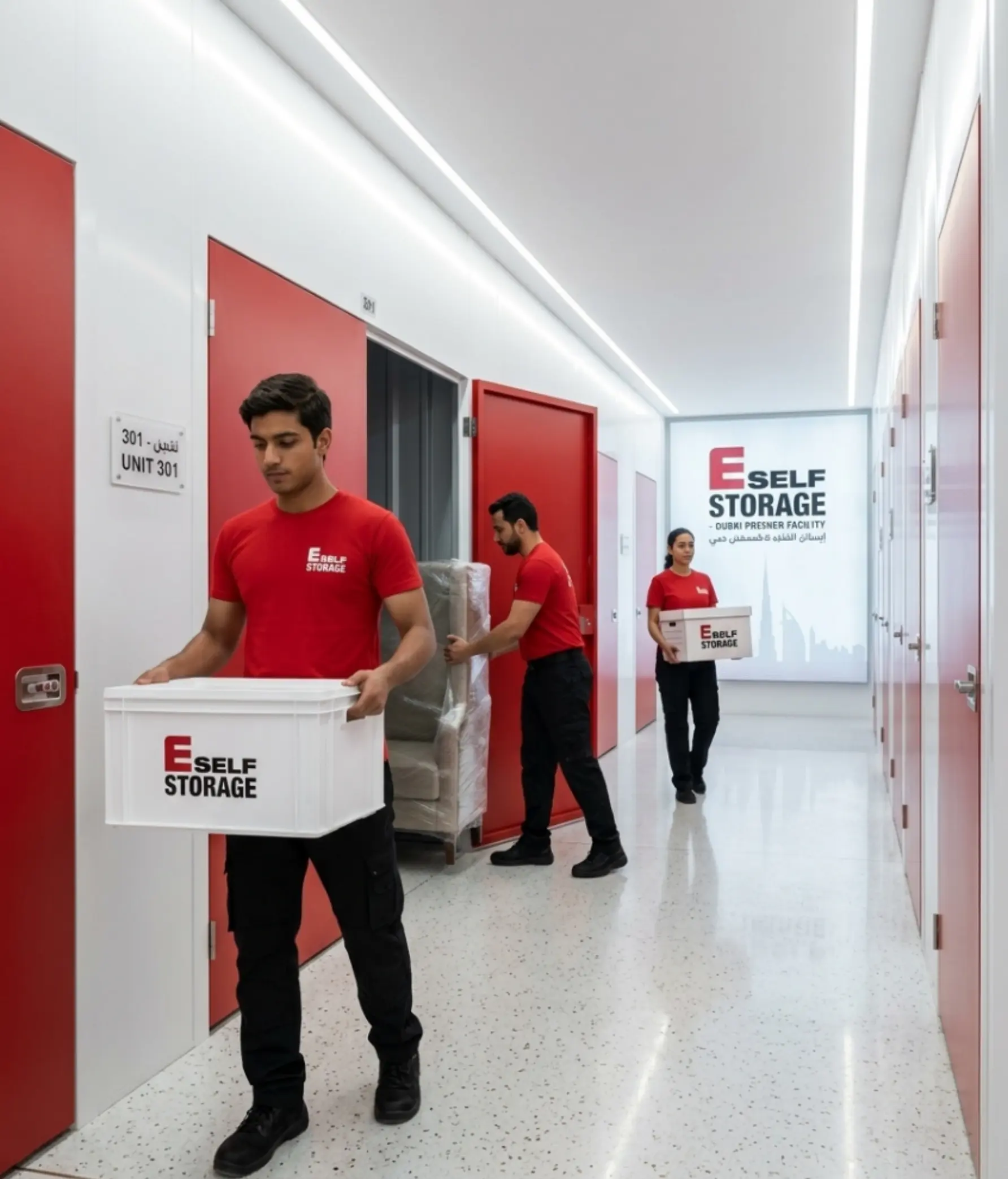
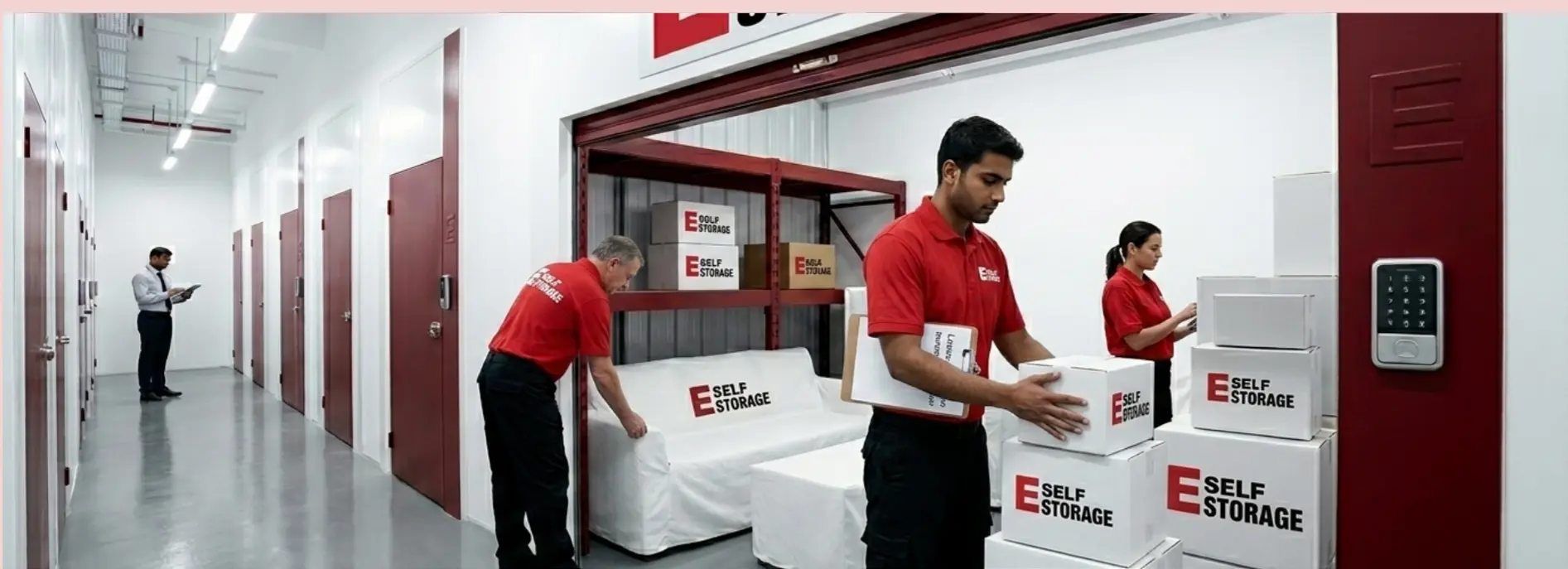
Self storage in Dubai is a private, individually locked storage unit rented on a monthly basis — used to hold personal belongings, household furniture, business inventory, or luggage outside the home or office, in a secured and climate-controlled facility that the renter accesses on their own schedule.
Dubai's residential market makes self storage a practical necessity for a large share of the population. Over 80% of Dubai's 4.1 million residents rent rather than own their homes, according to Bayut's 2024 market report. The average studio apartment in Dubai covers 500 square feet. The average 1-bedroom apartment covers 850 square feet. These are not spaces with spare rooms or garage storage. When a lease ends before the next property is ready, when a renovation clears three rooms simultaneously, when a family returning from a summer abroad needs 90 days of furniture storage, the question is not whether storage is needed but whether the storage available in Dubai actually protects belongings.
The UAE self storage market generated USD 602.5 million in 2024 and is projected to reach USD 859.2 million by 2030 at a 6.3% compound annual growth rate, according to Grand View Research. That growth reflects real and increasing demand from Dubai's expanding resident and business population, not a niche market for people with unusually large collections.
Dubai Residents — 2024
80%+
of Dubai's 4.1 million residents rent rather than own their homes.
Source: Bayut 2024 Market Report
Average Dubai Apartment
500 ft²
Average studio apartment
850 ft²
Average 1-bedroom apartment
No spare rooms. No garage storage.
UAE Self Storage Market
$859.2M
Projected by 2030 — up from $602.5M in 2024 at a 6.3% CAGR.
Source: Grand View Research